Performance Marketing Insights & Guides
9 min read
How to Run Meta Ads on a Small Budget and Actually Get Results

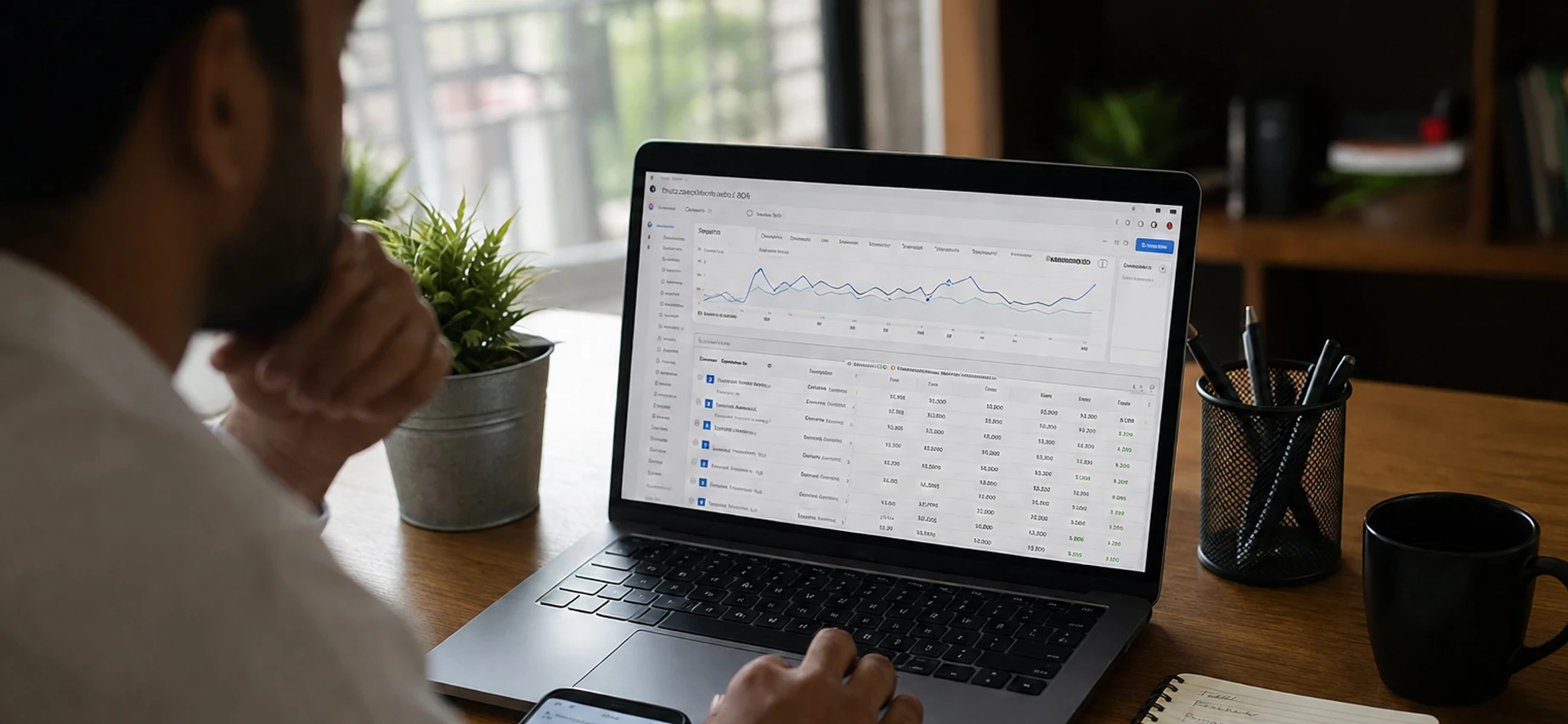
Most small business owners who try Meta ads for the first time make the same mistake: they set a low budget, run a broad campaign for a few days, see no results, and conclude that "Facebook ads don't work." The problem is almost never the platform — it's the approach. Meta's ad system rewards patience, structure, and data. Without those three things, even a large budget gets wasted.
This guide is built specifically for Indian small businesses running on ₹5,000 to ₹15,000 per month — a realistic starting range that can generate meaningful results when spent correctly. Here is exactly how to do it.
Step 1: Set Up Your Foundation Before Spending a Rupee
Before launching any ad, three things need to be in place:
- Meta Pixel installed on your website — this tracks visitor behaviour and is essential for retargeting and conversion optimisation. Without it, you're advertising blind.
- A Business Manager account — separate from your personal Facebook profile, with your ad account, page, and pixel all connected correctly.
- A clear landing page — the page a visitor sees after clicking your ad. This should have one clear goal (a form, a WhatsApp button, a purchase) and no distractions. As covered in our guide on website mistakes that cost you customers, a weak landing page is one of the fastest ways to waste an ad budget.
Step 2: Choose the Right Campaign Objective
Meta organises campaigns around objectives — what you want the ad to achieve. Choosing the wrong one is a common and costly mistake.
- Leads — use this if you want people to submit their name and number (most common for service businesses, consultants, local shops).
- Traffic — use this only if you have a specific reason to drive visits and have the Pixel tracking what happens next.
- Conversions / Sales — use this for e-commerce or if your website has a purchase or booking flow; requires Pixel data to work well.
- Awareness — rarely the right choice on a small budget; it optimises for reach, not action.
For most Gujarat-based small businesses starting out, Leads with Meta's native lead form (which keeps the user on Facebook/Instagram without visiting your site) is the lowest-friction, most cost-effective starting point.
Step 3: Budget Split — How to Allocate ₹5,000–₹15,000/Month
A small budget needs structure, not equal distribution across multiple campaigns.
- 70% on your primary conversion campaign — one campaign, one ad set, two to three creative variations. This is your main test.
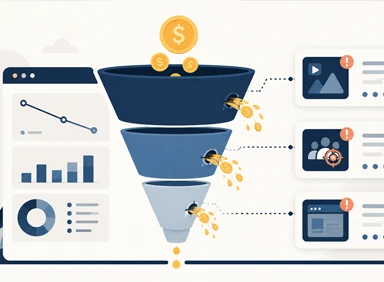
- 20% on retargeting — showing ads specifically to people who visited your website or engaged with your Instagram/Facebook page. Retargeting audiences convert at a much lower cost than cold audiences, even with a minimal spend.
- 10% on testing new creative — one new ad variation per week to gradually improve performance over time.
On a small budget, focus beats volume every time. One well-structured campaign with three creative variations will always outperform five scattered campaigns running simultaneously.
Step 4: Targeting — Specific Over Broad
Meta's algorithm has become significantly better at finding the right audience automatically, but it still needs direction — especially on a small budget where there's limited data to learn from.
- Start with interest-based targeting — choose 2 to 3 highly relevant interests, not 10. Broad interest stacking dilutes your audience and confuses the algorithm.
- Layer in location targeting — if you serve a specific city or region in Gujarat, restrict targeting to that area. Spending on clicks from Ahmedabad when you serve only Rajkot is wasted budget.
- Use Lookalike Audiences — once you have at least 100 existing customers or leads in a list, a lookalike audience finds people with similar profiles. This is one of the most efficient targeting tools available.
- Use Advantage+ Placements — let Meta decide whether to show your ad on Facebook Feed, Instagram Reels, Stories, or elsewhere. Manual placement restrictions often reduce performance on small budgets.
Step 5: Creative — What Actually Gets Results
On a small budget, ad creative is where the real leverage is. A great creative with average targeting outperforms average creative with great targeting — because creative quality directly affects your cost per click and cost per lead.
- Short video (15–30 seconds) consistently outperforms static images for engagement. The first 3 seconds determine whether someone stops scrolling — lead with a problem, a surprising fact, or a direct question relevant to your audience.
- Authentic over polished — a founder or team member speaking directly to the camera about what they do and who they help often outperforms an expensive produced video, especially for service businesses. This connects to what we covered in our post on how small brands compete with big companies — authenticity is a structural advantage.
- One clear message per ad — don't list all your services. Pick one offer, one audience, one outcome.
- Strong CTA — "Send us a message on WhatsApp," "Get a free quote," "Book a free call" — specific and low-commitment actions convert better than generic "Learn More."
Step 6: The Learning Phase — Don't Touch It
When a new ad launches, Meta enters a learning phase where it tests delivery across different audiences and times to find what works. This phase requires approximately 50 conversion events to complete — and if you make changes to the ad, budget, or targeting during this period, it resets.
The most common small-budget mistake: making changes after 2 days because "it's not working." Let every new ad run for a minimum of 7 days before making any judgements or adjustments. Premature changes waste the data already collected and extend the time before the ad performs efficiently.
Step 7: What to Track and When to Scale
The metrics that matter on a small budget are simple:
- Cost Per Lead (CPL) — how much you're paying for each enquiry. Benchmark this against what a customer is worth to your business. If a customer is worth ₹5,000 and your CPL is ₹200, the math works.
- Click-Through Rate (CTR) — if below 1%, your creative needs work. If above 2%, it's performing well.
- Frequency — if the same people are seeing your ad more than 3–4 times without converting, refresh the creative.
When to scale: if a campaign is profitable or breaking even after 2 weeks, increase the daily budget by no more than 20% every 3–4 days. Doubling the budget overnight forces the algorithm back into learning phase and often degrades performance.
Step 8: Use the Meta Ads Library to Research Competitors
The Meta Ads Library is a free, public tool that shows every active ad any business is running on Facebook and Instagram. Before launching your own campaign, search for competitors in your industry and city — look at what format they're using (video vs image), what their headline says, and which ads have been running the longest (longevity usually indicates they're working).
This isn't about copying — it's about understanding what's already resonating with your shared audience, and then doing it better. As part of the broader performance marketing strategies we build at Buzzlane, competitor ad research is a standard first step before any campaign launch.
Meta ads on a small budget aren't about spending less and hoping for the same results. They're about spending every rupee with a specific purpose — and letting data, not impatience, drive decisions.
Want better results from your Meta ads budget?
Buzzlane manages performance marketing campaigns for small businesses across Gujarat — from setup to scaling.
Frequently Asked Questions
What is the minimum budget to run Meta ads in India?
You can start Meta ads in India from as little as ₹100 per day, but a more realistic minimum for meaningful results is ₹300–₹500 per day (₹9,000–₹15,000 per month), which gives the algorithm enough data to optimise delivery effectively.
How long should I run a Meta ad before judging results?
Give any new ad at least 7 days before drawing conclusions. Meta's algorithm needs time — and ideally around 50 conversion events — to exit the learning phase and begin delivering to the right audience efficiently.
Should I run Facebook ads or Instagram ads for my small business?
Both run through the same Meta Ads Manager. Using Advantage+ Placements lets Meta automatically show your ad on whichever platform and placement performs best for your specific objective — typically a better approach than manually restricting to one platform.
What type of ad creative works best for small budgets?
Short video content — 15 to 30 seconds — consistently outperforms static images for engagement and click-through rates, especially on mobile. Authentic, unpolished videos often perform better than high-production ones for small businesses.
Latest Posts

Relevant Post
Satish M
With 15 years in IT and a passion for pixels, Satish is the brain behind Buzzlane. As a Web Designer and Front-End Developer turned founder, he knows what makes the web work — and more importantly, what makes it wow.