
Email Marketing
9 min read
Email Marketing Automation for Indian Small Businesses: 6 Flows That Make Money

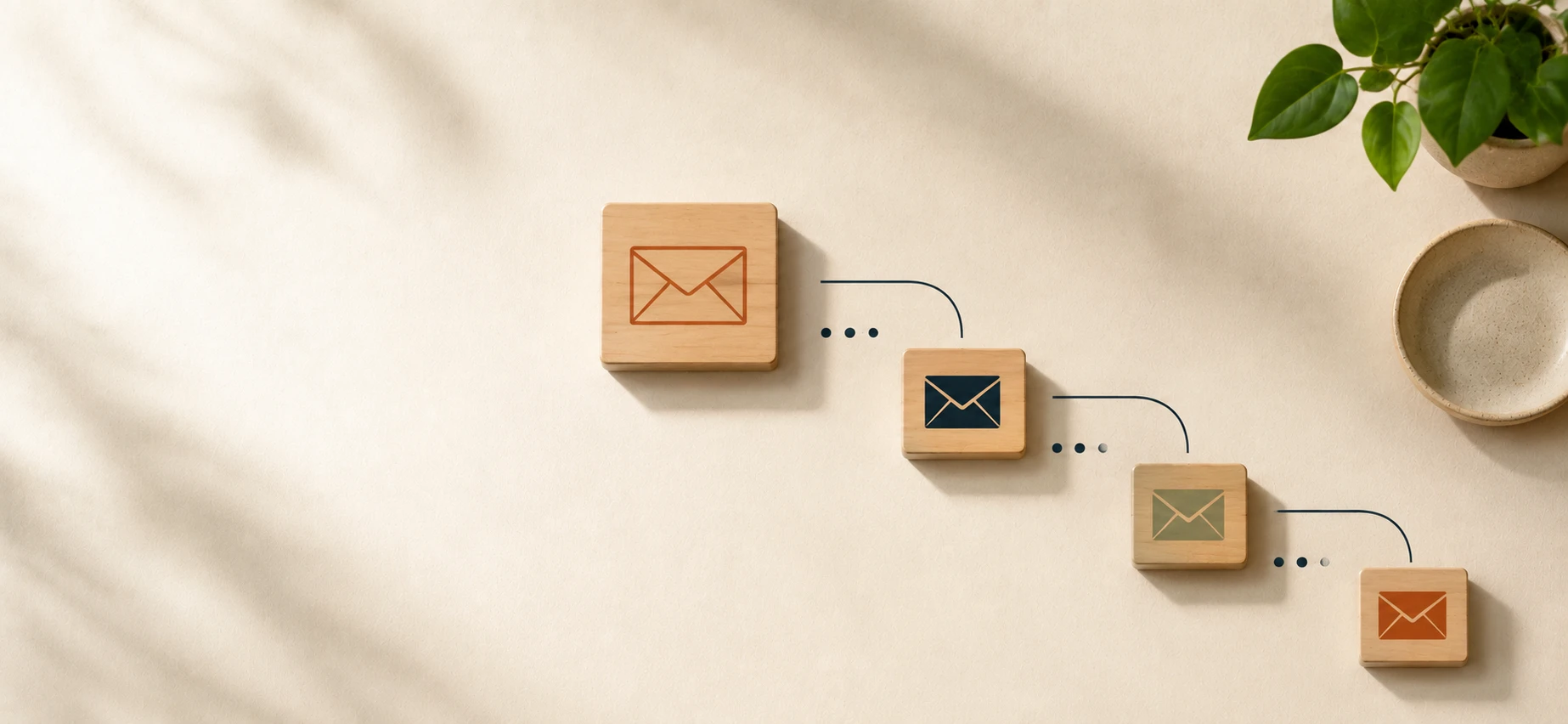
Most email advice for small businesses is about newsletters — what to write, how often, how to grow subscribers. Newsletters are a lot of ongoing work for uncertain return.
Automated flows are the opposite. You build them once, they trigger on their own, and they keep producing revenue from customers you already have while you get on with running the business. This covers six worth building, in the order they usually pay off, and — because this is India — where WhatsApp should carry the message instead.
First, Be Honest About Whether Email Is Your Channel
Global email playbooks assume a market where people live in their inbox. Many Indian customers don't, particularly consumer buyers in smaller cities, who read WhatsApp and ignore email entirely.
Email earns its place when the decision is considered rather than impulsive, when the customer needs a record they can refer back to, when you're selling to other businesses, or when there's an order to track. It's weaker for a walk-in retail customer who bought once and pays cash.
| Email fits | WhatsApp fits |
|---|---|
| B2B, education, travel, subscriptions, online stores | Local retail, salons, clinics, food, home services |
| Quotes, proposals, invoices, itineraries | Reminders, confirmations, quick offers |
| Longer explanations, comparisons, attachments | Two lines and a next step |
| Costs almost nothing per message | Marketing messages billed per send |
Most small businesses should run both, split by job rather than by preference. The economics matter here: email is nearly free at small-business volumes, while WhatsApp marketing templates carry a per-message charge, as covered in how to use WhatsApp Business for marketing in India. Email is the cheap channel for anything that isn't urgent.
The Six Flows
1. The abandoned enquiry or abandoned cart flow
Trigger: someone asked for a price, started a booking, or left items in a cart and didn't complete. Send: three emails, roughly one hour later, one day later, and three days later.
Build this one first. These people have already shown more intent than any audience you could buy, and you have already paid to reach them once. The first message should be short and helpful rather than salesy — confirm what they were looking at, answer the obvious question, offer to help. Save any discount for the third email, if at all; many recoveries need only a reminder.
For service businesses that don't have a cart, the equivalent is the quote that went quiet. Someone asked what something costs, you replied, and nothing happened. A polite follow-up sequence over the next week recovers a surprising share of them, and almost nobody sends one.
2. The welcome flow
Trigger: someone joins your list or buys for the first time. Send: two or three emails over the first week.
The first message goes out when interest is at its absolute peak, which makes it the most-read email you will ever send. Don't waste it on a logo and the word "Welcome". Tell them what you actually do, show your best-selling or most useful thing, and set expectations about what you'll send and how often.
If you offered a discount for signing up, deliver it here with a deadline. If you didn't, use the second email to share something genuinely useful and the third to introduce your range.
3. The post-purchase flow
Trigger: an order is delivered or a service is completed. Send: two or three emails over two weeks.
Three jobs in sequence: make sure they're happy, ask for a review, then suggest what naturally comes next. Order matters — asking for a review before checking satisfaction is how you collect a public complaint.
Keep the review request open-ended and unincentivised; the rules on this tightened during 2026 and the details are in how to rank on Google Maps in India. This flow is also the cheapest review-generation system a small business can run.
4. The replenishment or renewal reminder
Trigger: a predictable interval since the last purchase or service. Send: one email shortly before the due date, one on it.
Wildly underused, and close to free money for the businesses it suits. A service due in six months, an annual maintenance contract, a product that runs out in eight weeks, a policy renewal, a dental check-up, a re-order of consumables.
The customer already decided they wanted this. The only thing standing between you and the repeat sale is remembering to remind them — which is exactly what automation is for. Work out your natural interval from your own records rather than guessing.
5. The win-back flow
Trigger: no purchase or contact for a period that's unusual for your business — often six to nine months. Send: two emails, a fortnight apart.
The first asks rather than sells: is everything alright, did we miss something, here's what's new. The second can carry a genuine incentive to return.
Two useful side effects. Some replies will tell you exactly why customers left, which is information you can't buy. And anyone who ignores both emails can be quietly removed from your list, which improves your deliverability for everyone who remains.
6. The seasonal pre-warm sequence
Trigger: a date, set in advance. Send: two or three emails in the weeks before your peak.
This is the India-specific one. Rather than a single festive blast competing with everyone else's, warm the list in the fortnight before — new stock arriving, gifting ideas, delivery cut-off dates, early access for existing customers.
Set it up in August for a season that peaks in November, because attention and advertising both get expensive later; the timing is laid out in our festive season marketing calendar for 2026. Your own list is the one channel whose cost doesn't rise during festival season, which makes it disproportionately valuable in exactly the weeks everyone else is bidding.
Build Them in This Order
All six at once is how nothing gets finished. A realistic sequence for a small business: abandoned enquiry first, then post-purchase, then welcome, then whichever of replenishment or seasonal fits your model, then win-back.
Each flow is two or three short emails. Written plainly, in your own voice, with one clear action per email. Long designed templates perform no better than a plain message that reads like a person wrote it, and they take far longer to produce.
Deliverability: The Part That Decides Everything
None of this matters if your emails land in spam.
Major providers now expect anyone sending in volume to authenticate their domain properly — SPF, DKIM and DMARC records — to offer one-click unsubscribe, and to keep complaint rates very low. This is a technical job that takes an hour once and then protects everything you send afterwards.
- Send from your own domain, never a free address. Mail from a Gmail or Yahoo address blasted to a list is treated with suspicion by design.
- Get SPF, DKIM and DMARC set up on your domain. Your email platform documents this and any competent developer can do it.
- Never buy or scrape a list. One bad send can damage a domain reputation that takes months to rebuild.
- Remove people who never open anything. A smaller engaged list outperforms a large dormant one, and costs less on most plans.
- Make unsubscribing easy and instant. People who can't leave click spam instead, which is far worse for you.
Measure Flows, Not Opens
Open rates have become unreliable — privacy features on some mail apps pre-load images and register opens that never happened, so the number is inflated by an unknown amount that differs between audiences.
Judge each flow on what it produced: clicks, replies, enquiries, and revenue per email sent. Because flows run continuously, you can also compare a month against a month rather than one campaign against another. The measurement discipline is the same as everywhere else — count gross profit against total cost, as in how to measure ROI from digital marketing.
Also watch what happens after the click. An email that does its job and lands someone on a slow or confusing page has wasted the only attention you'll get, which is the argument in 10 signs your website is costing you customers.
What This Costs
Usually nothing to begin with. Most email platforms have free tiers that comfortably cover a few hundred to a few thousand contacts, which is more than most small businesses have.
Two things to check before committing. First, whether automation flows are included in the entry plan or reserved for a higher tier — some platforms give you free sending but charge for exactly the feature this article is about. Second, whether billing is in rupees or dollars, since dollar pricing moves with the exchange rate and often adds a card fee.
Whatever you pick, the cost of the software is rarely the deciding factor. The flows either get built or they don't, and that's a decision about a weekend, not a budget — though it's also the kind of thing a good email and automation setup pays for itself on within a couple of months.
A newsletter is work you do every week. A flow is work you do once, that keeps selling on a Tuesday afternoon while you're serving a customer at the counter.
Six flows, built once, earning quietly every week.
Buzzlane writes and connects email automation for Indian businesses — from abandoned enquiries to renewal reminders that pay for themselves.
Frequently Asked Questions
Does email marketing still work in India, or has WhatsApp replaced it?
Both are true in different places. For consumer businesses selling locally, WhatsApp usually wins on attention and speed. Email remains stronger for business buyers, education, travel, subscriptions and online stores with order flows, and it costs almost nothing per message once your list exists. Most businesses should use email for considered decisions and records, and WhatsApp for anything urgent or brief.
Which automated email flow should a small business build first?
The abandoned enquiry or abandoned cart flow, because it recovers money you have already spent to earn. Someone who asked for a price or left items behind has shown more intent than any cold audience, and a two or three message sequence over the following week is usually the highest-return automation available to a small business.
Why do my emails land in spam or promotions?
Usually because your domain is not properly authenticated. Major providers expect bulk senders to have SPF, DKIM and DMARC records in place, an easy one-click unsubscribe, and complaint rates kept very low. Sending from a free address rather than your own domain, or mailing a purchased list, makes the problem considerably worse.
Are open rates a reliable measure of email performance?
Not any more. Privacy features on some mail apps pre-load tracking images, which registers opens that never happened, so open rates are inflated and inconsistent between audiences. Judge flows on clicks, replies, enquiries and revenue per email sent instead, and use open rates only as a rough comparison between two versions of the same campaign.
How much does email marketing software cost for a small business in India?
Often nothing to begin with. Most platforms have free tiers covering a few hundred to a few thousand contacts, which is more than enough while you build the list. When you do pay, look for rupee billing rather than dollar pricing, and check whether automation flows are included in the entry plan or gated behind a higher tier.
Latest Posts

Satish M
With 15 years in IT and a passion for pixels, Satish is the brain behind Buzzlane. As a Web Designer and Front-End Developer turned founder, he knows what makes the web work — and more importantly, what makes it wow.