
Digital Marketing Insights & Trends
10 min read
How to Use WhatsApp Business for Marketing in India (2026 Guide)

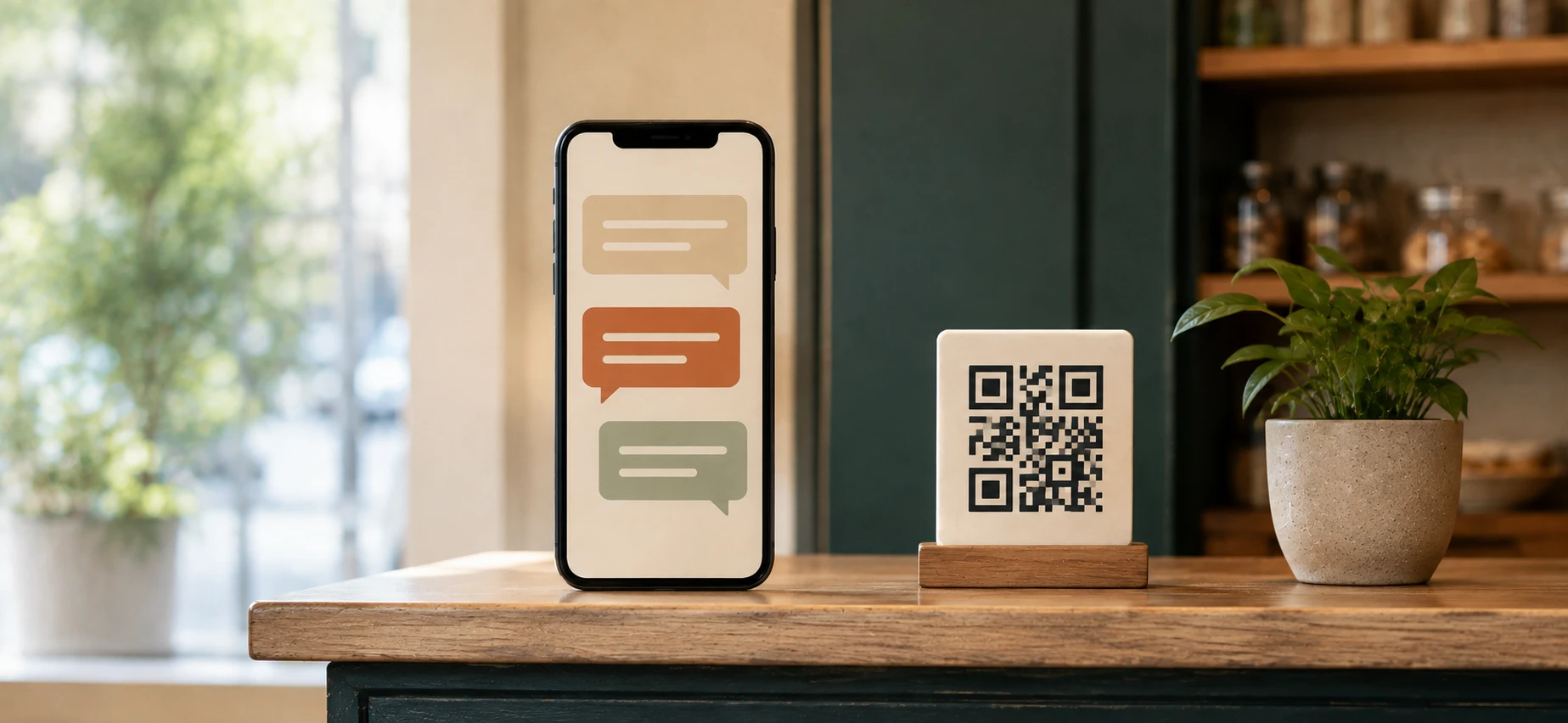
For most Indian small businesses, WhatsApp isn't a marketing channel bolted on to the others. It's where the sale actually happens — the enquiry, the negotiation, the photograph of the product, the confirmation, the follow-up next month.
Which makes it strange that most guides on the subject are either a tour of the free app's settings menu or a pitch for enterprise software. The useful information sits in between: what the free app genuinely does, when paying is justified, what it costs now that the pricing model has changed, and how not to lose your number.
Three Things Called WhatsApp, and Which One You Need
| What it's for | Cost | |
|---|---|---|
| Personal WhatsApp | Not for business — no catalogue, no automation, one device, and your customers see your personal profile | Free |
| WhatsApp Business app | Most small businesses. Catalogue, quick replies, greeting and away messages, labels, broadcast lists | Free |
| WhatsApp Business Platform (API) | Several staff on one number, automated flows, integration with your systems, messaging at volume | Platform fee plus per-message charges |
The honest advice, which vendors have no incentive to give: stay on the free app until something specific breaks. Usually that's one of three things — two people needing to answer the same number at once, more customers than manual replies can handle, or broadcasts you can't send because of the rule in the next section.
Get the Free App Working Properly First
Most businesses on the Business app use perhaps a quarter of it.
- Quick replies. Save your five most repeated answers — price list, timings, location, delivery, payment options — and send them with a keyboard shortcut. This alone saves more time than any paid tool.
- Greeting and away messages. An automatic reply outside working hours, telling someone when you'll respond, prevents the enquiry going to whoever answers first.
- The catalogue. Products with prices and photographs, sent as a link inside a chat instead of typing details every time. For many small retailers this is the closest thing to a website they need — though if you do have one, make sure it earns the click, as our website design work usually starts by fixing exactly that.
- Labels. New enquiry, quoted, paid, delivered, repeat customer. Crude, free, and it turns your inbox into a follow-up list.
- Your short link and QR code. Put the QR at the counter, on bills, on packaging, on your board outside. Every scan opens a chat with you.
The broadcast rule that catches everyone
A broadcast on the free app only reaches people who have saved your number in their contacts. Everyone else simply doesn't get it.
This is why so many businesses conclude broadcasts don't work. The fix is a habit: when someone messages you the first time, ask them to save your number, and give them a reason — offers, order updates, new stock. It takes one line and it decides whether your list is real.
What It Costs in 2026, and Why That Changed
If you move to the Business Platform, understand the billing model, because it was rewritten and most published guides still describe the old one.
Until mid-2025 you paid per 24-hour conversation, however many messages it contained. Since July 2025 you pay per delivered template message. And from January 2026 India moved to rupee billing with revised rates.
Roughly, for messages to Indian numbers as of the January 2026 revision:
- Marketing templates — promotions, offers, re-engagement — around eighty-six paise per delivered message, up about ten per cent from the previous rate.
- Utility templates — order updates, appointment reminders, delivery notifications — around eleven and a half paise, roughly seven times cheaper.
- Authentication templates — one-time passwords — about the same as utility.
- Service replies — your free-form replies inside a window a customer opened by messaging you — free, with no monthly cap.
On top of Meta's charges sits your provider's platform fee, commonly somewhere between a thousand and three thousand rupees a month for entry tiers, and some providers add their own per-message markup. Rates and plans change, so treat these as the shape of the bill rather than a quotation, and ask any provider for a total estimate at your expected volume.
What that means in practice
Five thousand marketing messages costs a little over four thousand rupees in Meta charges alone, plus the platform fee. The same five thousand messages sent as utility updates costs a few hundred. That gap should shape everything you do.
Three ways to keep the bill sensible:
- Let customers start the conversation. Replies inside a customer-initiated window are free, and conversations opened from a click-to-WhatsApp ad carry a free messaging window. Acquisition through ads, QR codes and website buttons is dramatically cheaper than broadcasting to a list.
- Send utility, not marketing, wherever it's honest to do so. An order update is a utility message; an order update with an offer bolted onto it is a marketing message, and gets classified as one at approval. Don't try to game this — do genuinely send more useful messages and fewer promotional ones.
- Stop broadcasting to everyone. Sending to two thousand people because you can is how the bill grows and the quality rating falls. Send to the four hundred who bought something similar.
Because click-to-WhatsApp conversations start free, they're often the cheapest lead route available to an Indian small business — a point worth weighing when deciding where ad budget goes, as in Google Ads vs Meta Ads for Indian small businesses.
Building a List You're Allowed to Message
Never buy a number list. It is the single fastest way to lose your business number, and the numbers are worthless anyway.
Legitimate sources, in rough order of value: people who have messaged you before, customers who gave a number at purchase and agreed to updates, scans of your QR code, clicks from your website button, and people who arrived through a click-to-WhatsApp ad. Each of those is someone who chose to talk to you.
Ask permission plainly — "may I send you offers and updates on WhatsApp?" — and record the answer. Make opting out easy and honour it immediately. Beyond being the law's direction of travel on personal data in India, this is self-interest: WhatsApp watches how often recipients block or report you.
The Quality Rating Nobody Warns You About
Your number carries a quality rating based on how customers react to your messages. Blocks and reports lower it. A low rating restricts how many people you can message per day, and repeated problems can end with the number restricted entirely.
This is the real risk in WhatsApp marketing, and it's why the channel rewards restraint in a way that email never did. Practical guardrails:
- Two to four promotional messages a month is plenty for most businesses. Weekly is pushing it.
- Every message should be worth the interruption — a genuine offer, a real update, something that customer specifically wants.
- Segment before sending. Relevance is what stops the block.
- Watch your rating in the provider dashboard. A dip is a warning, not a statistic.
- Templates need approval before use, and approval takes time, so write and submit festive templates well before the season starts.
The block button is one tap and permanent. Email gets ignored; WhatsApp gets you removed.
What's Actually Worth Sending
- Order and appointment updates. Cheap, welcomed, and they keep the conversation window open.
- Follow-ups on enquiries that went quiet. The highest-return message most small businesses never send. Someone asked about price three weeks ago and you never went back to them.
- New stock or a new service, sent only to people it plausibly suits.
- Festival offers, a few times a year and timed against the calendar rather than the day itself — the planning in our festive season marketing calendar for 2026 applies directly, and your own list is the one channel that doesn't get more expensive in November.
- Review requests, sent individually after service. Note that asking must stay open-ended — the rules on incentives and gating are covered in how to rank on Google Maps in India.
- Genuinely useful content in the language your customers use — a care tip, a seasonal reminder, an answer to something they'd otherwise call to ask.
Measuring It
WhatsApp is unusually easy to measure if you set it up deliberately.
Use a different click-to-chat link for each source — one on Instagram, one on your website, one in ads — each opening with a slightly different pre-filled message. Your inbox then tells you where every enquiry came from without asking anyone. Track enquiries received, how many became customers, and what those customers were worth, then measure it the way described in how to measure ROI from digital marketing.
Response time deserves its own line. Most WhatsApp enquiries are lost not to the wrong message but to a reply that arrived the next morning. If you improve one thing this month, make it that — and if drafting fast replies is the bottleneck, that's one of the better uses of the tools in AI tools Indian small businesses can actually use.
Mistakes That Cost Businesses Their Number
- Uploading a purchased list and broadcasting to it. Fast route to restriction.
- Using a personal number for business, then losing the history when the phone changes.
- Sending daily offers because the messages are cheap. The messages are cheap; the blocks are not.
- Paying for the API before the free app was fully used.
- Adding customers to groups without asking. Groups are for communities, not customers.
- Broadcasting to a list nobody saved your number from, then concluding WhatsApp doesn't work.
- Long paragraphs. People read WhatsApp in seconds — two lines and a clear next step.
WhatsApp gives you a direct line to the customer's pocket. The businesses that keep it are the ones that use it least and best — and the ones that let customers start the conversation.
Enquiries piling up in an unread inbox?
WhatsApp flows, opt-ins and broadcasts set up to convert — compliant, measured, and unlikely to get your number blocked.
Frequently Asked Questions
Is the WhatsApp Business app enough, or do I need the API?
The free app is enough for most small businesses, and longer than most vendors will tell you. It handles catalogues, quick replies, greeting and away messages, labels and broadcast lists at no cost. Move to the Business Platform through a provider only when you need several staff answering one number, automated flows, or messaging at a volume broadcast lists cannot handle.
How much does WhatsApp marketing cost in India in 2026?
On the free app, nothing. On the Business Platform you pay per delivered template message plus your provider's platform fee. As of the January 2026 India rate revision, marketing templates are billed at roughly eighty-six paise each, utility and authentication templates around eleven and a half paise, and replies inside a customer-initiated window are free. Rates change, so confirm current figures before budgeting.
Why do broadcast lists only reach some people?
A broadcast on the free app is only delivered to people who have saved your number in their contacts. That single rule is why most broadcast campaigns quietly underperform. Ask customers to save your number when they first message you, or move to the Business Platform, where that restriction does not apply but each message is billed.
Can I message customers whose numbers I already have?
Only with their consent, and never from a purchased or scraped list. WhatsApp measures how often recipients block or report you, and a poor quality rating restricts how many people you can message before it costs you the number entirely. Collect opt-ins at the counter, on your website and through ads instead.
How do I keep WhatsApp marketing costs down?
Let customers start the conversation. Replies inside a customer-initiated window are free, and conversations opened from a click-to-WhatsApp ad carry a free messaging window, so acquisition through ads, QR codes and website buttons costs far less than broadcasting to a list. Reserve paid marketing templates for offers genuinely worth sending.
Latest Posts


Relevant Post


Satish M
With 15 years in IT and a passion for pixels, Satish is the brain behind Buzzlane. As a Web Designer and Front-End Developer turned founder, he knows what makes the web work — and more importantly, what makes it wow.