
Digital Marketing Insights & Trends
9 min read
SEO vs Paid Ads: What to Invest in First as an Indian Small Business

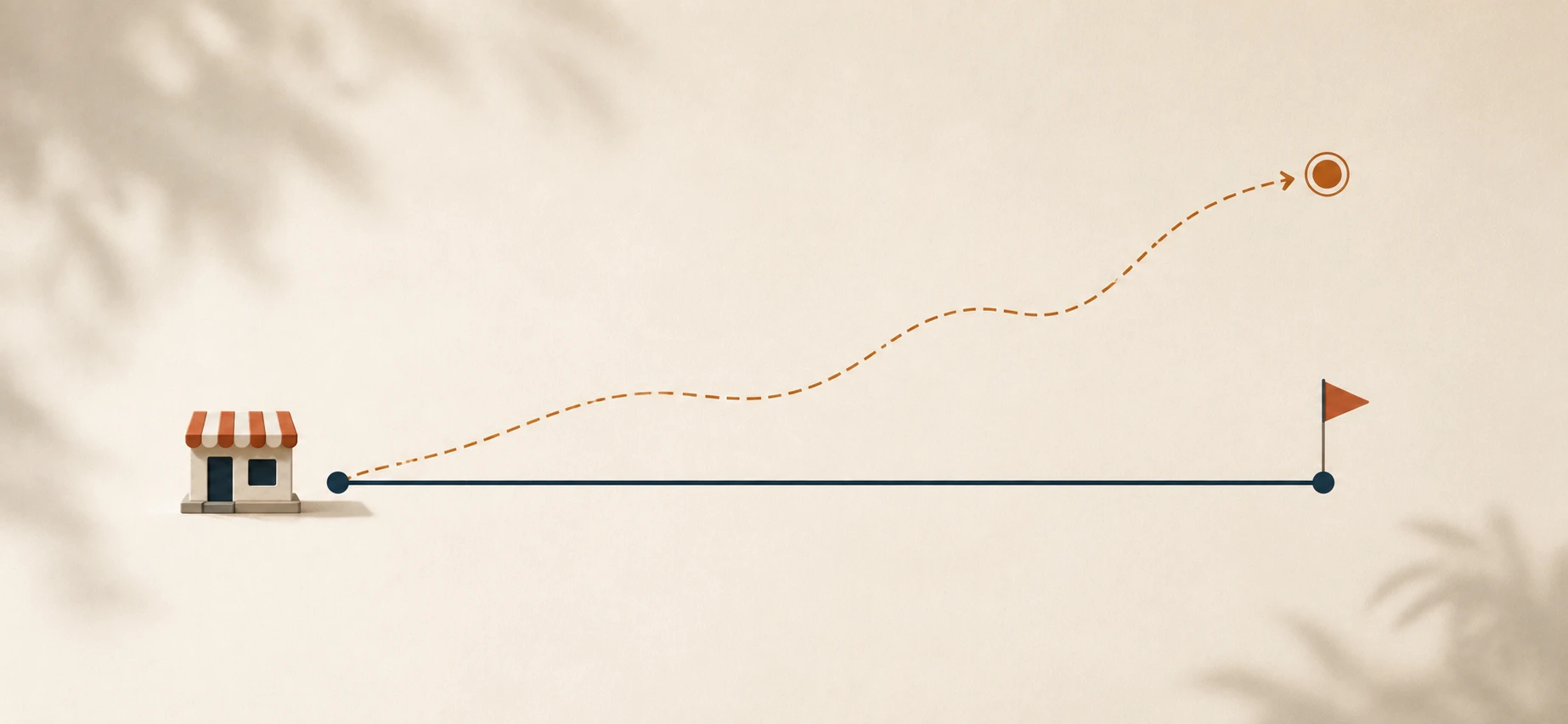
The standard answer to this question is that SEO compounds and ads don't, so run ads for cash flow while SEO builds in the background. It's sensible advice, and it quietly assumes you can afford to fund two things at once.
Most small businesses can't. They have one budget, and the real question is where the first fifteen or twenty thousand rupees a month should go. That's a different question, and it has a clearer answer than the "do both" consensus suggests.
The Choice Isn't Actually Between Two Things
Before comparing SEO and ads, there's a third option that outperforms both as a first investment for any business serving a local area, and it barely appears in these comparisons because nobody sells it as a monthly retainer.
A complete Google Business Profile, real photographs, correct hours, and a steady flow of genuine reviews. It costs nothing but your time. It can produce calls within weeks rather than months. And it feeds the map results and the AI-generated answers that now sit above both the paid and organic listings.
If that groundwork isn't done, buying ads is paying for attention you could have earned, and buying SEO is building on a foundation you skipped. The practical steps are in how to rank on Google Maps in India, and the reasoning behind it in what local SEO is and why it matters. Do that first. It takes an afternoon and a habit.
With that said, the real comparison.
What You're Actually Buying
| Paid ads | SEO | |
|---|---|---|
| First enquiries | Days | Three to six months |
| Payback on total spend | Within the month, or not at all | Often nine to twelve months |
| When you stop paying | Stops the same day | Decays slowly over months |
| Cost per enquiry over time | Flat or rising | Falls, if sustained |
| Control | High — switch off tomorrow | Low — you're committed for months |
| Fails when | Margins are thin or follow-up is slow | Nobody searches, or you stop early |
The Arithmetic Behind "SEO Is Cheaper"
It is cheaper. The part usually left out is when.
Take a modest SEO engagement at fifteen thousand rupees a month. By the time the channel is producing meaningful enquiries — call it month seven — you have spent slightly over a lakh with relatively little to show along the way. The same money in ads would have produced enquiries in week two, every month, and produced nothing at all the month you stopped.
Neither of those is the better deal in the abstract. They are different financial products. Ads are an operating expense that converts cash into customers this month. SEO is closer to a capital investment: you pay up front and collect later, which only works if you have the cash to pay up front.
Which leads to the question that actually decides this: can you fund six to nine months of SEO out of money you already have, without needing the returns to pay for it? If yes, start SEO now — it's the better asset and every month you delay pushes the payoff back. If no, the decision has been made for you, and pretending otherwise is how businesses end up cancelling an SEO retainer in month four, having paid for all of the cost and none of the benefit.
Before Either: Does the Demand Exist?
Both channels capture people searching. If few people in your area search for what you sell, both will disappoint you, and no amount of budget fixes it.
Open Keyword Planner, set the location to your city rather than to India, and check the terms a customer would type. Hundreds or thousands of monthly searches means both channels are viable. A few dozen means search is a small line, not a growth engine, and your customers are being reached somewhere else — usually social discovery, as in growing a local business on Instagram without paid ads.
Categories where local search demand is usually strong: medical and dental, repairs, legal and financial services, coaching, real estate, travel, anything urgent. Usually thin: fashion, décor, handmade goods, food brands, anything people didn't know existed.
What AI Answers Change
The comparison articles written even a year ago assumed SEO buys traffic. Increasingly it buys something slightly different.
A growing share of questions are answered on the results page or inside an AI assistant, without a click reaching anyone. For SEO that means part of the return has shifted from visits to being the business named in the answer — which still produces customers, but won't show up in your traffic reports the way rankings used to.
Two practical consequences. Traffic forecasts from an SEO proposal deserve more scepticism than they used to. And the work that makes you citable — accurate listings, real reviews, clear factual pages with prices and specifics — has become the highest-value part of SEO for a small business, which is convenient, because it's also the cheapest part. We covered the mechanics in what GEO is and how Indian businesses should prepare.
Ads are unaffected in how they work, though they compete for a shrinking pool of clicks too.
Both Fail Into the Same Website
Whichever you pick, the visitor lands on the same page. If that page is slow, unclear about price, or missing an obvious way to message you, you have bought a leak rather than a customer.
This is worth checking before either investment, because it's cheap to fix and it doubles the return on everything downstream. A visitor who arrived from an ad you paid ninety rupees for and left in four seconds cost you ninety rupees. The common failures are in 10 signs your website is costing you customers.
Deciding in Four Questions
- Do you need enquiries in the next sixty days to keep the business steady? If yes, ads. This overrides everything below.
- Can you fund nine months of SEO from cash in hand? If yes, start SEO in parallel or first. If no, ads until you can.
- Do people search for your category in your city? If no, neither — the money belongs in social discovery.
- Is your margin thin? Ads need a healthy margin to work at all; at 20 to 25 per cent you need roughly four rupees back for every rupee spent just to break even, which many small advertisers never reach. Thin margins push you toward the slower, cheaper channel — and toward fixing pricing before either.
For most Indian small businesses the honest sequence is: fix the listing and the website first, run ads to produce cash and to learn which terms actually convert, then use that evidence to direct SEO once you can afford to wait. Ads tell you which keywords are worth ranking for, which makes the SEO that follows considerably cheaper. Choosing where the ad money goes is a separate decision, covered in Google Ads vs Meta Ads for Indian small businesses.
Two Things to Watch in How These Are Sold
Worth knowing, because the incentives differ.
SEO is usually sold on a lock-in, ads are not. A twelve-month retainer is defensible given how long the work takes to pay back, but it also means the money is committed before any result exists. Ask what happens in months one to four, what you'll be shown monthly, and whether you keep the content and access if you leave. Any promise of quick rankings is a reason to walk away.
"SEO costs stay flat while ads keep rising" is only half true. Retainers do rise, competitors do improve, and stopping means slow decay rather than a permanent asset. SEO is a fixed cost with compounding returns, not a one-time purchase — treat any pitch that implies otherwise carefully.
Whichever you buy, measure it on gross profit rather than the multiples in the proposal — the method is in how to measure ROI from digital marketing. A well-run SEO programme and a well-run paid campaign should both survive that test; if one can't be measured at all, that's your answer.
When to Add the Second
You're ready to add the other channel when the first one is producing enquiries at a cost you're comfortable with, consistently, for three months. Not before.
If ads came first, the signal to start SEO is when you have a list of search terms you know convert and can afford to fund the wait. If SEO came first, the signal to add ads is a page already earning enquiries that could take more volume immediately.
The wrong signal in both cases is boredom, or a competitor doing something visible. Adding a second channel to a first one that isn't working yet doesn't diversify the risk. It just halves the attention on the problem.
SEO isn't cheaper than ads. It's cheaper later — and the only question that matters is whether you can afford to still be here when later arrives.
Not sure what your first ₹20,000 a month should buy?
We sequence search and paid work around your cash flow and margins — not around whichever package we'd prefer to sell.
Frequently Asked Questions
Should a small business start with SEO or paid ads?
Usually paid ads, if you need enquiries within the next few months and cannot fund six to nine months of work before returns arrive. SEO is the better long-term investment but it is paid in advance, which makes it a poor first choice for a business that needs the returns to fund the spending. For a local business, the free groundwork on your business listing should come before either.
Is SEO really cheaper than paid advertising?
Eventually, and only if you sustain it. Nine months of a modest SEO retainer is a substantial sum spent before the channel produces much, so the saving arrives well after the spending does. It is cheaper per enquiry in year two and more expensive in month two, which is why the honest question is not which is cheaper but which you can afford to wait for.
What should a local business invest in before either?
A complete Google Business Profile, real photographs, accurate hours and a steady flow of genuine reviews. It costs nothing but time, it can produce calls within weeks rather than months, and it feeds the map results and AI answers that now sit above the paid and organic listings. Skipping it to buy ads is paying for attention you could have earned.
How long does SEO take to pay back in India?
Local visibility can move within weeks, but competitive rankings usually take three to six months and payback on the total spend often takes nine to twelve. Smaller cities move faster than metros because the local competition is weaker. Treat any promise of quick rankings as a reason to look elsewhere.
Does AI search change the SEO versus ads decision?
It changes what SEO buys. More questions are now answered without a click, so some of the return has shifted from traffic to being the business named in the answer. That makes accurate listings, reviews and clear factual pages more valuable, and makes traffic forecasts less reliable. Ads are unaffected in mechanism but face the same shrinking pool of clicks.
Latest Posts




Relevant Post

Satish M
With 15 years in IT and a passion for pixels, Satish is the brain behind Buzzlane. As a Web Designer and Front-End Developer turned founder, he knows what makes the web work — and more importantly, what makes it wow.